

Why Every Plant Parent Starts With a Plant Disaster
The first plant I ever bought was a ficus tree with a braided trunk.
Not a tiny starter plant. Not a pothos cutting in a coffee mug. A full-on tree.
I saw it at a big box store and could already picture it in my newly purchased home. It was going to sit near the huge east-facing picture window, right beside my new white leather sofa. In my mind, the whole living room came together around that plant. The tree looked elegant. The trunk looked fancy. The leaves looked full and glossy.
I had taken basic biology in school, so I figured I had this covered. Plants need soil, water, and light. Simple enough.
So I gave it soil, water, and light.
Then I slowly loved that ficus to death.

The plant looked beautiful, but the setup was a trap
I bought a white ceramic floor planter because the plant had to look good. The planter had a drainage hole in the bottom, which made me feel responsible and informed.
But I also had hardwood floors.
So, to protect the floor, I left the ficus inside its plastic grower pot. Then I put the grower pot inside a plastic bag. Then I placed all of that into the ceramic planter.
In my mind, I had solved every problem.
The plant looked beautiful. The floor was safe. The pot matched the room. The tree had light from the window. I watered it like a proud new plant parent.
Then the leaves started falling.
At first, it was just a few. A leaf here. A leaf there. I told myself ficus trees probably did that sometimes. Then more leaves dropped. Every time I walked by, another one seemed to be on the floor.
So I watered it.
More leaves fell.
So I watered it again.
More leaves fell.
I thought the plant was thirsty because that was the only plant problem I knew how to solve. Drooping? Water it. Yellowing? Water it. Leaves falling? Water it. Looking sad? Water it, then stare at it with concern.
What I did not understand was that the plant was sitting in wet soil with nowhere for the extra water to go. The drainage hole in the beautiful ceramic planter did not matter much because the plant was sealed inside a plastic bag. The grower pot could drain, technically, but the water had no real exit.
I had created a tiny swamp inside a pretty pot.
Overwatering often looks like underwatering
This is one of the cruel little jokes of houseplants. A plant that has too much water can look like a plant that does not have enough.
Leaves can droop. Leaves can yellow. Leaves can fall. The soil may stay damp below the surface even if the top looks dry. The roots can begin to suffocate because roots need oxygen too.
That was the part I missed. I thought soil, water, and light were the full story. They are not.
Plants also need air around their roots. They need a potting mix that does not stay soggy forever. They need drainage that actually drains. They need the right amount of water at the right time, not water every time we panic.
My ficus was not asking for more attention. It was asking for better conditions.
But I did not know how to read the signs yet.
That is where so many plant disasters begin. Not with laziness. Not with neglect. Often, they begin with care. Too much care. Nervous care. Care based on guessing instead of observing.
A new plant parent sees a problem and wants to fix it fast. Water feels like action. It feels helpful. It feels loving.
Sometimes, it is the thing making everything worse.

The smell told the truth before I did
After a while, I gave up.
The ficus was nearly naked by then. The once-full tree looked like a sad bundle of sticks with a few stubborn leaves hanging on. I stopped watering it, partly because I was frustrated and partly because I had no idea what else to do.
Then came the smell.
Every time I tried to relax in my serene living room, I caught a whiff of something foul. At first, I did not connect it to the plant. The room looked clean. The sofa was new. The floors were clean. The planter still looked nice.
But the smell kept returning.
Eventually, I realized the plant was the culprit. When I investigated, the truth was hard to deny. The soil was stale and sour. The roots had likely been sitting wet for far too long. That beautiful setup had turned into a hidden rot factory.
And naturally, I blamed the store.
They must have sold me a rotten plant. They must have known it was near death. I had paid good money for that ficus, and it had betrayed me in my own living room.
Looking back, I can laugh at that part. At the time, I was genuinely offended.
The store may or may not have sold me a stressed plant. Big box plants can go through a lot before they reach the sales floor. They may sit in poor light, get watered on a schedule instead of by need, or experience temperature swings during shipping.
But the final chapter of that ficus story happened in my house.
I did not know what I did not know.
Plant care is not as simple as “just add water”
Most of us start with the same simple idea:
Put the plant near a window
Give it a nice pot
Water it when it looks sad
Hope for the best
That can work for some plants, at least for a while. But houseplants are living things, and they respond to the whole environment.
A plant is affected by:
The direction and strength of the light
The type of potting mix
The size of the pot
The presence or absence of drainage
Indoor temperature
Humidity
Airflow
How often the soil dries out
The season
The plant’s natural growth habits
That sounds like a lot, but it becomes easier with time. You do not need to become a botanist before buying a houseplant. You just need to learn how to notice what is happening.
My ficus sat by an east-facing window, which was not a bad light source. Morning light is often gentle and helpful for many indoor plants. The issue was not only light. The issue was that I treated one correct thing as proof the whole setup was correct.
Good light could not save roots that were sitting in trapped water.
A beautiful planter could not make up for poor drainage.
My good intentions could not replace basic plant care habits I had not learned yet.
Even experienced plant people lose plants
Here is the part beginners need to hear more often: even professionals have killed a plant or two.
Anyone who says they have never lost a plant either has not kept many plants, has been extremely lucky, or has a selective memory.
Plants die for many reasons. Sometimes the plant was stressed before it came home. Sometimes pests arrive unnoticed. Sometimes a heat vent blasts the leaves all winter. Sometimes a sunny window becomes too intense in summer. Sometimes life gets busy and watering gets forgotten. Sometimes we overcorrect and create a new problem while trying to solve the old one.
A dead plant does not mean you are bad at plants.
It means you are learning.
The difference between a beginner and an experienced plant parent is not that one kills plants and the other does not. The difference is that experience teaches you what to check next time.
After a plant disaster, you start asking better questions.
Is the soil wet or dry below the surface?
Does the pot drain freely?
Is the plant sitting in standing water?
Has the light changed with the season?
Are the roots healthy?
Did I move the plant recently?
Could this be normal leaf drop from stress?
Those questions turn panic into problem-solving.

What I wish I had known with that first ficus
If I could go back to that living room, before the leaves fell and before the smell took over, I would give myself a few simple rules.
Use decorative pots wisely
There is nothing wrong with a ceramic planter. There is nothing wrong with using a decorative cover pot, also called a cachepot. The problem starts when water gets trapped inside.
If you keep a plant in its nursery pot and place it inside a decorative planter, lift the nursery pot out when you water. Let it drain fully in the sink or tub. Then put it back once it stops dripping.
If the decorative pot has a drainage hole, make sure that water can actually leave the pot. A plastic bag at the bottom defeats the purpose.
Protect the floor with a proper saucer, a cork mat, a plant stand, or a waterproof tray. Do not seal the plant into a wet pocket.
Check the soil before watering
A watering schedule can help you remember to check your plants, but it should not decide for you.
Check the soil first. Use your finger, a wooden chopstick, or a moisture meter if you like tools. For many common houseplants, the top inch or two of soil should dry before watering again. Some plants want to dry more. Some want to stay lightly moist.
The point is simple: do not water because a week has passed. Water because the plant is ready.
Learn what your specific plant prefers
A ficus is not a cactus. A fern is not a snake plant. A monstera is not an orchid.
Every plant has preferences. Some forgive mistakes. Some hold a grudge and drop leaves dramatically when moved, chilled, overwatered, underwatered, or looked at funny. Ficus trees are famous for reacting to change, which makes them both beautiful and humbling.
Before bringing home a new plant, look up the basics:
Light needs
Watering preferences
Potting mix
Common problems
Signs of stress
You do not need to know everything. A five-minute search can prevent the most common mistakes.
Quarantine and inspect new plants
This is something many beginners skip because the excitement takes over. A new plant comes home, and we want to place it in the perfect spot right away.
Before that, inspect it.
Look under the leaves. Check where the stems meet the soil. Look for webbing, sticky residue, brown bumps, tiny flying insects, or mushy stems. If you own other plants, keep the new one separate for a bit so pests do not spread.
This would not have fixed my plastic-bag swamp, but it is one of those habits that saves heartache later.
The disaster becomes part of your plant story
For a long time, I remembered that ficus as a failure.
Now I see it as the beginning.
That tree taught me that a stylish planter is not the same as a healthy setup. It taught me that drainage has to be real, not decorative. It taught me that falling leaves do not always mean thirst. It taught me that plants communicate, but not in the obvious ways beginners expect.
It also taught me humility.
There is something strangely personal about killing a plant. You picked it. You brought it home. You imagined it thriving. When it declines, it can feel like a judgment.
But plants are not judging us. They are responding to conditions.
That shift matters. Once you stop seeing plant problems as personal failures, you can start seeing them as information.
Yellow leaves are information. Drooping is information. Dry crispy edges are information. Fungus gnats are unpleasant information, but still information. Even a foul smell from a decorative planter is information you will never forget.
A better way to start again
After a first plant disaster, many people decide they simply do not have a green thumb.
I do not love that phrase. It makes plant care sound like a trait you either have or do not have. In reality, plant care is a set of learned skills.
You learn to water less often but more thoroughly.
You learn to match plants to your actual home, not the fantasy version of your home.
You learn that low light does not mean no light.
You learn that the cute pot needs a drainage plan.
You learn that roots matter as much as leaves.
You learn that one dead plant does not cancel out all future success.
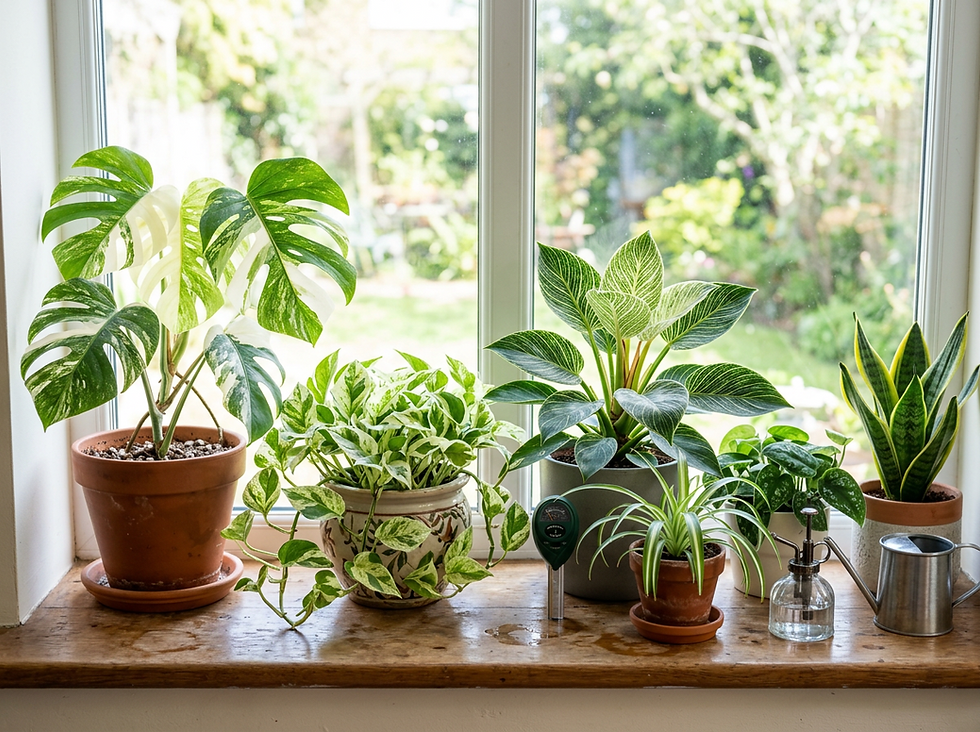
If you are starting over, choose one forgiving plant and get to know it well. A pothos, snake plant, ZZ plant, philodendron, or peace lily can be a good teacher, depending on your home and habits. Start small. Keep the nursery pot if it has drainage. Use a cover pot if you like the look, but remove extra water after watering.
Most of all, resist the urge to fix every sad leaf with more water.
Pause. Check. Then act.

Your first plant disaster is not the end
That braided ficus never became the elegant living room tree I imagined. It became a lesson in a white ceramic pot.
Honestly, that lesson proved valuable, and I still have the ceramic pot after all these years. It has nurtured several thriving plants since my mishap.
Every plant parent starts somewhere. Sometimes that beginning looks like a thriving windowsill herb garden. Sometimes it looks like a nearly naked ficus and a mysterious smell in the living room.
If your first plant failed, you are in good company. If your second plant failed too, still good company. The goal is not perfection. The goal is to notice, adjust, and keep learning.
The next plant gets the benefit of what the last plant taught you.
Start with curiosity. Give the roots air. Let the water drain. Check before you water. And when a plant does not make it, take the lesson without taking the shame.
That is how plant parents are made, one mistake, one leaf, and one comeback at a time.


Comments