


Peace Lilies Explained: History, Growth, and Care Tips for These Dramatic Houseplants
A peace lily can look perfect at breakfast and completely pitiful by dinner. One missed watering, one hot window, or one dry room, and those glossy leaves may droop like the plant has given up on life.
That drama is part of why people remember peace lilies. They are graceful, expressive houseplants with deep green leaves and elegant white blooms. They are also one of the most common plants given for sympathy, memorials, and homegoing services. Their calm look fits moments of grief, but peace lilies are much more than funeral plants. They are beautiful everyday houseplants, thoughtful gifts, and reliable indoor favorites when cared for the right way.
The key is understanding what they are trying to tell you before the leaves wilt too far. A peace lily can bounce back from a light droop, but repeated severe wilting weakens the plant. Over time, the leaves may yellow, crisp, or lose their ability to recover fully.
Peace lilies are not true lilies
Peace lilies belong to the genus Spathiphyllum. Even though people call them lilies, they are not true lilies. This matters because true lilies and peace lilies come from different plant families and grow in different ways.
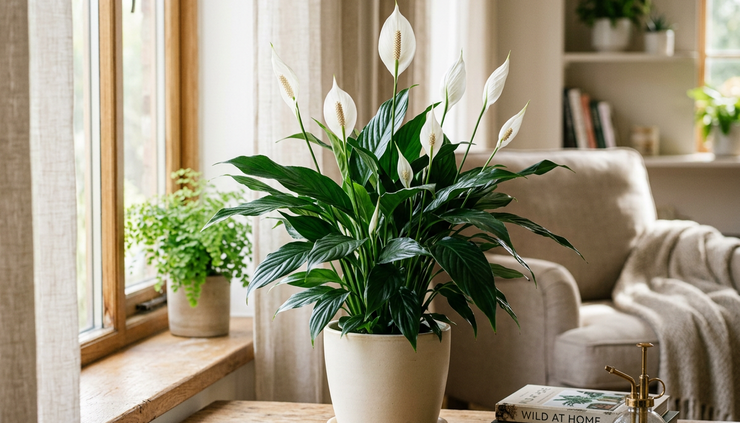
The white “flower” most people notice is not actually a flower petal. It is called a spathe, a modified leaf that wraps around the central spike, called the spadix. The tiny true flowers sit on that spike. This same general flower structure appears in other aroids, such as anthuriums and philodendrons.
Peace lilies are native to warm, tropical regions, especially parts of Central and South America. Some relatives are also found in Southeast Asia. In their natural habitat, they grow on the forest floor where light is filtered through taller trees. That tells you a lot about what they want indoors.
They like:
Warm rooms
Bright but indirect light
Even moisture
Humidity
Loose soil that drains well
They do not like:
Cold drafts
Harsh direct sun
Bone-dry soil
Soggy roots
Being ignored until collapse
That forest-floor background explains why peace lilies do so well in homes, churches, offices, and public spaces. They tolerate lower light better than many flowering plants, yet they still look lush and full.
Why peace lilies became sympathy
Peace lilies have long been associated with peace, innocence, hope, and rest. The white spathe has a quiet, clean look that feels appropriate for solemn occasions. Because of that, florists often suggest peace lilies for sympathy gifts, memorial services, and homegoings.
A homegoing service, especially in many Black Christian traditions, honors a person’s passing as a return home to God. It can hold both grief and celebration. A peace lily fits that setting because it is dignified without being showy. It can sit beside a casket, at a church entrance, near a photo display, or in a family home afterward.
There are practical reasons too. Cut flowers fade quickly. A peace lily can live for years with proper care, becoming a living reminder of love and support. When someone brings one home after a service, it can mark a connection to the person who passed. Each new leaf or bloom may feel like a small sign of continuity.
That said, peace lilies are not only for funerals. They also work beautifully as:
Housewarming gifts
Birthday gifts
Thank-you plants
Church plants
Porch or patio accents in warm shade
Everyday décor for bedrooms, living rooms, and entryways
Their meaning does not have to be limited to loss. A peace lily can represent calm, renewal, care, and fresh beginnings.
How peace lilies grow indoors
Peace lilies grow in clumps from the base. New leaves unfurl from the crown, and mature plants slowly become fuller over time. Some varieties stay compact, while others grow large, broad leaves that create a bold tropical look.
Most indoor peace lilies bloom off and on rather than nonstop. The white spathes may appear more often when the plant receives enough bright, indirect light. In deeper shade, the plant may stay green and healthy but bloom less often.
A typical indoor growth cycle looks like this:
New leaves emerge from the center.
Leaves expand and darken as they mature.
Flower stems rise above or near the foliage.
White spathes slowly turn cream, green, or brown as they age.
Older leaves yellow and naturally die back.
Yellowing is not always a crisis. One old yellow leaf at the bottom of the plant is normal. Several yellow leaves at once usually point to a care issue, often watering, light, or root stress.
Peace lilies also grow toward light. If one side gets brighter exposure, the plant may lean. Rotate the pot every week or two to keep the shape balanced.
Why peace lilies wilt so dramatically
Peace lilies are famous for their dramatic wilt. When the soil gets too dry, water pressure inside the leaves drops. The plant loses firmness, and the leaves sag. Give it water in time, and it may perk back up within hours.
The problem comes when wilting becomes extreme or repeated. If the leaves collapse badly, the roots and leaf tissue may suffer stress. The plant may recover partway but never look quite the same. Tips may brown. Leaves may crease. Older foliage may yellow and fail.
A light droop is a warning. A full collapse is stress.
Do not use wilting as your regular watering reminder. Peace lilies communicate clearly, but waiting until they faint every time is hard on the plant.
A better method is to check the soil. Water when the top inch feels dry, or when the pot feels lighter than usual. The exact timing depends on the pot size, soil type, room temperature, season, and light.
In a warm, bright room, a peace lily may need water more often. In winter or low light, it will dry out more slowly.
How to water a peace lily the right way
Watering is the biggest part of peace lily care. The goal is evenly moist soil, not swampy soil.
Here is a simple method:
Touch the top of the soil.
If the top inch feels dry, water thoroughly.
Let water run through the drainage holes.
Empty any water sitting in the saucer.
Wait until the top begins to dry again before watering.
Peace lilies do best in pots with drainage holes. A decorative pot without holes can trap water at the bottom and cause root rot. If you love the look of a cachepot, keep the plant in a nursery pot inside it. Remove the inner pot to water, let it drain, then place it back.
Signs of underwatering include:
Drooping leaves
Dry soil pulling away from the pot edge
Crispy brown tips or edges
Leaves that feel thin or limp
Signs of overwatering include:
Yellow leaves
Mushy stems near the base
Sour-smelling soil
Fungus gnats
Soil that stays wet for many days
The tricky part is that both overwatering and underwatering can cause drooping. Check the soil before reacting. If the soil is wet and the plant is drooping, do not add more water. Look for root problems, low oxygen in the soil, or a pot that is too large.
The best light for strong leaves and blooms
Peace lilies are often called low-light plants, but that phrase can be misleading. They can tolerate lower light, but they grow and bloom better in bright, indirect light.
Good spots include:
A few feet from an east-facing window
Near a north-facing window
Behind a sheer curtain in a bright room
In a shaded sunroom
On a covered porch during warm months
Avoid strong afternoon sun directly on the leaves. Too much direct light can bleach or burn them. Brown patches, faded leaves, or crispy spots may mean the plant is getting too much sun.
Too little light can also cause problems. The plant may survive, but it may stop blooming, grow slowly, and reach toward the nearest window. If your peace lily has not bloomed in a long time and looks otherwise healthy, try moving it to a brighter spot with filtered light.

Soil, pots, and repotting
Peace lilies like soil that holds some moisture but still lets extra water drain away. A standard indoor potting mix often works well if it is not too dense. If the mix stays wet too long, add perlite, orchid bark, or another airy amendment.
A good peace lily soil should feel:
Light
Slightly springy
Moist but not muddy
Easy for roots to move through
Repot when the plant becomes root-bound or dries out too quickly after watering. A root-bound peace lily may have roots circling the bottom of the pot, crowded growth, or water that runs straight through without soaking in.
Move up only one pot size at a time. A much larger pot holds more wet soil than the roots can use, which increases the risk of rot.
Spring is usually the best time to repot because the plant is entering active growth. After repotting, the plant may droop for a short time while it adjusts. Keep it out of harsh sun, water carefully, and give it time.
Feeding and blooming
Peace lilies are not heavy feeders. Too much fertilizer can burn roots and cause brown leaf tips. During spring and summer, feed lightly with a balanced houseplant fertilizer according to the label. Many growers use a diluted amount rather than full strength.
Skip fertilizer when the plant is stressed. Do not feed a wilted, newly repotted, or root-rotted plant and expect fertilizer to fix it. Care comes first. Fertilizer supports growth, but it does not replace proper light, water, and soil.
If a peace lily will not bloom, check these basics:
It may need brighter indirect light.
It may be too young or recently divided.
It may need time after repotting.
It may be using energy to recover from stress.
It may be in a very low-light location.
Healthy leaves matter more than constant flowers. A full, glossy peace lily is still beautiful, even between bloom cycles.
Common peace lily problems and what they mean
Peace lilies are good communicators. Their leaves often show what is going wrong before the plant is too far gone.
Problem | Common cause | What to do |
Drooping leaves | Dry soil, wet soil, heat, or root stress | Check soil moisture before watering |
Brown tips | Dry air, inconsistent watering, fertilizer salts, or water quality | Trim tips, flush soil, adjust care |
Yellow leaves | Overwatering, age, low light, or root trouble | Remove damaged leaves and inspect care routine |
No blooms | Not enough light or plant still recovering | Move to brighter indirect light |
Pale leaves | Too much sun or nutrient issues | Adjust light and feed lightly in growing season |
Mushy base | Root rot or crown rot | Remove from wet soil and inspect roots |
Brown tips are common indoors. They do not always mean the plant is dying. Trim them with clean scissors if they bother you. Follow the natural shape of the leaf so the cut looks tidy.
Dust can also dull the leaves. Wipe them gently with a damp cloth every few weeks. Clean leaves absorb light better and show off the plant’s natural shine.
Dividing peace lilies
As peace lilies mature, they form multiple crowns. You can divide them to create new plants or refresh an overcrowded pot.
The best time is spring or early summer. Water the plant the day before dividing so the roots are hydrated. Slide the plant from the pot, gently loosen the root ball, and separate sections that already have leaves and roots attached.
Place each division in a pot with fresh soil. Keep the new plants evenly moist while they settle in. Some drooping after division is normal, but severe wilting means the plant needs attention.
Division is also a meaningful way to share a peace lily. A plant received at a homegoing, memorial, or special event can become several plants for family members. That makes the peace lily more than decoration. It becomes a living connection.
A quick note about pets and children
Peace lilies contain calcium oxalate crystals, which can irritate the mouth and stomach if chewed. They are not true lilies, but they can still be harmful to pets and children who nibble plants.
Place them out of reach if you have curious cats, dogs, or small children. If a pet or child eats part of the plant, contact a veterinarian, pediatrician, or poison control resource for guidance.
Peace lilies belong in everyday life too
Peace lilies carry a long association with sympathy, peace, and remembrance. That history is part of their beauty. But they should not be reserved only for sorrowful moments. They also bring softness to a room, mark new beginnings, and make excellent gifts for people who enjoy plants with presence.
Care for them by reading their signals early. Give them bright indirect light, steady moisture, a pot that drains, and warmth. Do not let them wilt hard over and over. A peace lily may be dramatic, but it is also generous. Treat it with consistency, and it will reward you with glossy leaves, graceful blooms, and years of quiet beauty.


Comments